The Stoic Philosophy of Compounding
December 19th, 2025
Shiv Puri
Two millennia ago, my favorite Stoic philosopher Seneca wrote to his friend Lucilius:
“Each day, try to acquire something that will fortify you against poverty, against death, indeed against other misfortunes as well.”
Seneca wasn’t trying to be a buzzkill. He was describing the quiet architecture of endurance—the small, daily acts that build moral, intellectual, and emotional resilience long before crisis strikes. His counsel feels modern because it mirrors the mathematics of compounding: One percent improvement each day transforms you over one year is nearly 38 times (1.01³⁶⁵). And a one percent slide per day slowly erodes everything—0.99³⁶⁵ is close to zero.
In markets, as in life, we chase the dramatic moments because they are exciting. But the truth is more mundane: Compounding is built in increments over time.
Fortification in Investing
At TVF Capital, our most enduring investments have not been the ones that dazzled early but the ones that learned to persist through difficult years—companies that embody the stoic temperament of business, of fortifying each day.
So, how do we fortify our investments? We focus on three things: the management team, the moat, and the quality of the business. You’ll notice I haven’t mentioned financials yet. That is deliberate. Financials are an outcome—the end product of a qualitative input. The numbers, although very important, are backward-looking. The job of the investor is not to describe the past but to form the most accurate possible view of the future.
I always begin with management. With every company founder or CEO, I try to answer one question: What is the truth of their ambition? In my experience, ambition usually falls into three buckets: the pursuit of money, the pursuit of fame, or the desire to build an institution with purpose that outlasts the individual. All our big successes have been with the third group: people who want to solve a real societal problem or deliver a service they are deeply passionate about, and who see wealth and recognition as by-products rather than the goal.
Next is the moat. The venerable hedge fund manager and philanthropist Chris Hohn defines a moat as a durable structural advantage that allows a company to deploy increasing amounts of capital at high incremental returns for many years. Moats come in many forms: network effects that strengthen with scale; switching costs that lock in customers; regulatory or licensing barriers; proprietary data that compounds intelligence; intangible assets such as brand and trust; they also derive from daily fortification through execution. A true moat doesn’t just protect but widens as the company executes.
Finally, industry structure matters. We favor industries with long-term tailwinds, whether from low penetration, formalization potential, or deep structural growth. Conversely, excessively cyclical or capital-intensive sectors introduce avoidable execution and duration risk. The right industry amplifies a good business; the wrong one erodes even the best execution.
As examples, Bajaj Finance fortified itself through disciplined risk culture, technology-led execution, and the institutional ambition to prepare long before shocks arrived. Microsoft did the same by rebuilding its culture, migrating patiently to the cloud, and placing long-term, coherent bets on AI. Visa compounds through a global network effect that strengthens with every new participant and every transaction.
Fortification through Margin of Safety
Every serious investor learns that a margin of safety is not a spreadsheet concept but a psychological one. It is the emotional buffer that protects conviction when markets test patience. Aurelius wrote, “What is essential is invisible to the eye.” Balance sheets and stock charts are visible. Culture, integrity, governance, and mission—the true sources of durability—are not.
A margin of safety, then, is about knowing what you actually own at the level of people, values, and purpose, not just the price you pay for a business. In a crisis, numbers move faster than the core strength of the business. Management, moat and industry structure determine whether a business is “antifragile”, as the well-known author Nicholas Taleb describes it, or whether it breaks.
Although we talk about compounding as a financial miracle, it is also a moral one. The habits it requires—patience, humility, restraint, curiosity—are character traits long before they are investment skills. They are the inner scaffolding that allows an investor to stay the course when noise overwhelms signal.
And just as individuals compound character, societies compound credibility. Singapore’s founders understood this deeply. They built fiscal, institutional, and reputational reserves not out of fear but out of realism. A small country cannot afford improvisation in moments of shock, so the founders prepared meticulously long before those shocks arrived. Singapore’s reputation was not manufactured; it was earned one competent act at a time—an unbroken chain of trust. That mindset is profoundly Stoic: Fortify today so that tomorrow’s uncertainty has nothing left to erode.
Conclusion
The paradox of compounding is that the world admires the outcome but resists the process. Most want the inflection point; few are willing to live through the years that precede it. Whether in nation-building or investing, what lasts is barely shaped by brilliance in the moment, but by the consistency of building reinforcements each day over a long period of time.
Singapore’s fiscal prudence, Bajaj Finance’s risk culture, Microsoft’s culture of reinvention—all reflect a discipline of daily reinforcement. Seneca called it fortification. Lee Kuan Yew called it discipline. Warren Buffett calls it compounding.
They are all describing the same truth: Greatness—in people, companies, or nations—is rarely one big moment. It is small daily actions that compound quietly into something enduring.
Shiv Puri
Founder and Managing Director, TVF Capital
Chairman, Vesta Global
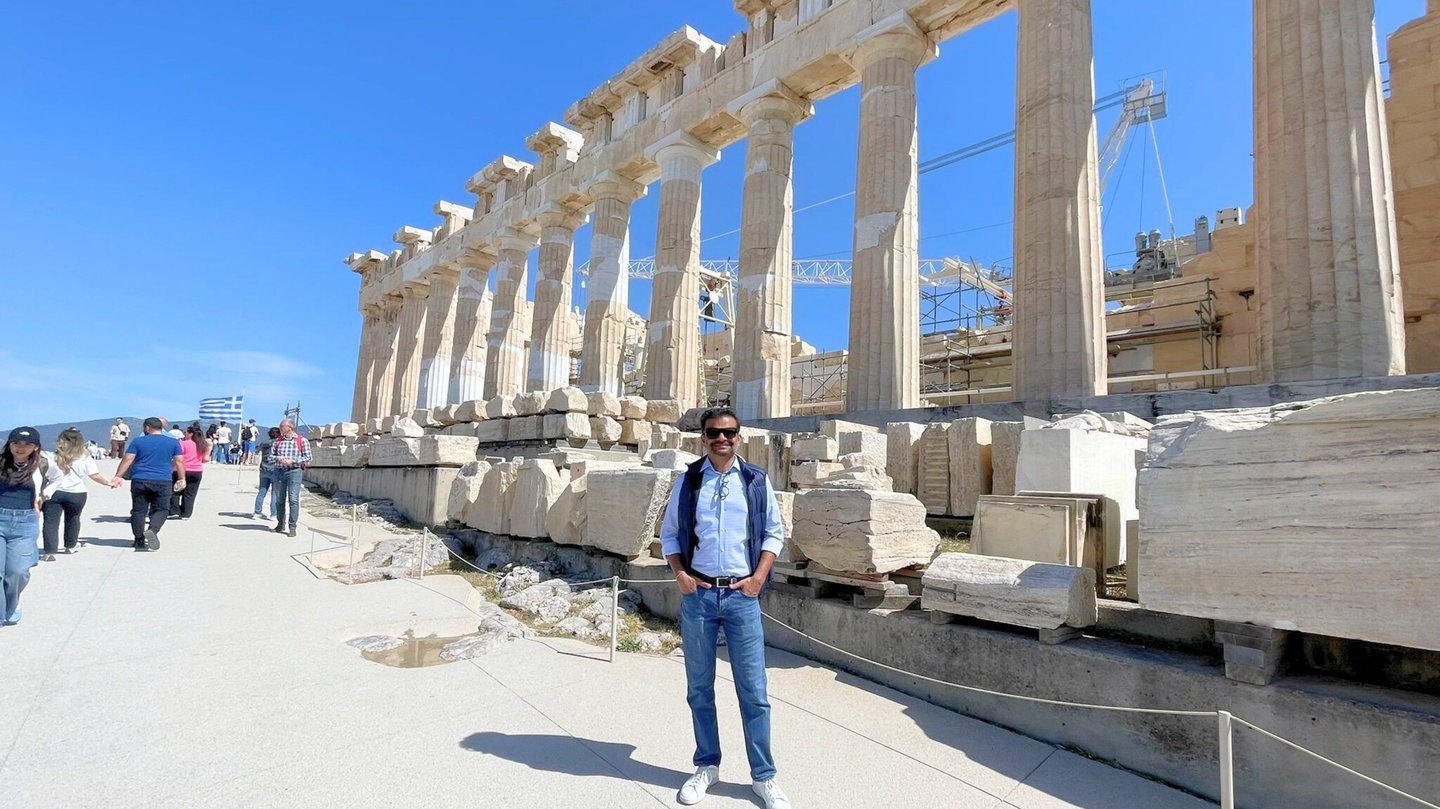
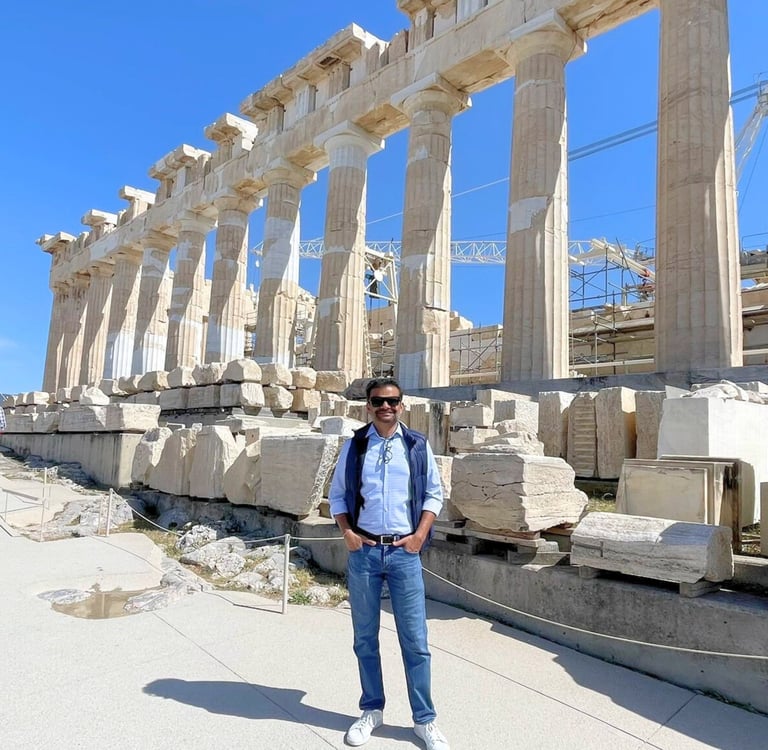
Connecting philosophy to investing in Athens.
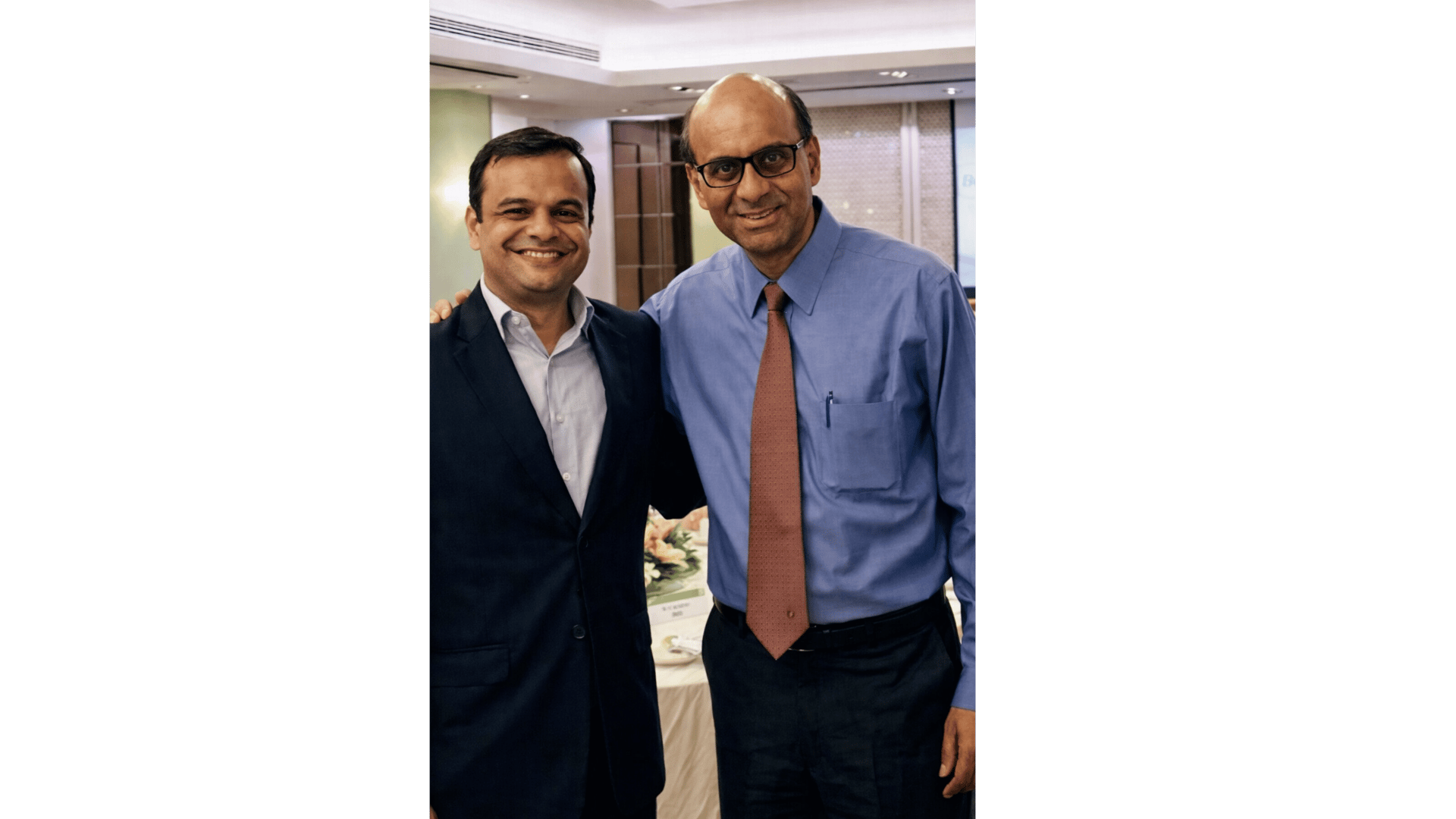
Shiv Puri with Tharman Shanmugaratnam, President of Singapore